BY DONNA DE LEVANTE RAPHAEL, PH.D.
Director of Research, Alzheimer’s Foundation of America
There was a time when Alzheimer’s disease was not part of my vocabulary. I didn’t study aging. I didn’t understand cognitive decline. I believed, like so many people do, that Alzheimer’s begins with memory loss, forgotten names, misplaced keys, repeated stories. I thought I would recognize it if and when it came.
I was wrong.
What I didn’t know is that Alzheimer’s often begins long before memory fails. It begins with subtle shifts of personality, in changes in mood and behavior that are easy to dismiss and easy to explain away.
My mother was changing. I saw moments. I did not see a pattern. I saw behavior. I did not see the brain. These are the moments I missed.

1. Irritability That Didn’t Belong
My mother had always been patient, measured and warm. But then came a sharpness, small at first. A tone that felt unfamiliar. She would snap over minor things, react in ways that didn’t match the situation. I told myself she was stressed, not coping with the changes during her retirement. Tired. Having a bad day.
But the irritability didn’t pass. I didn’t ask: Is this new? Is this consistent? Is this her or something happening to her?
That was my first missed opportunity.
2. Withdrawal Disguised as Rest
My mother began pulling away from the things she loved. Social gatherings became “too much.” Phone calls went unanswered. Activities that once brought her joy no longer seemed to matter. I thought she needed space. I respected what I believed was her choice to rest, to slow down.
But this wasn’t rest. It was withdrawal. A quiet loss of motivation. A fading engagement with life.
I didn’t recognize it as apathy, one of the earliest neuropsychiatric symptoms of Alzheimer’s disease. I didn’t see that her world was shrinking, not by preference, but by pathology.
3. Missed Moment: Anxiety Without a Name
There was a growing unease in her. A nervousness that didn’t quite make sense. She would worry about small things, repeat concerns, struggle to settle. At times, she seemed overwhelmed by situations she once handled with ease.
I told myself this was normal. Aging. Life changes. Perhaps even loneliness. I didn’t consider that new onset anxiety, especially later in life, can be an early signal of brain change. I didn’t ask deeper questions. I didn’t seek a clinical evaluation.
4. Sleep That Was Never Restful
Her sleep began to change. Restless nights. Daytime fatigue. A rhythm that felt off, but not alarming enough to act on. We spoke about it casually, as if it were just another inconvenience of getting older.
But sleep disruption is not just about rest; it is deeply connected to brain health. I didn’t know that disrupted sleep patterns can reflect early neurodegenerative processes.
5. Emotional Distance
Perhaps the most painful change was the one I could feel but not explain. My mother seemed…different. Not absent, not gone, but not fully present in the way she once was. There was a subtle emotional distance. A disconnect I couldn’t quite name.
I questioned myself. I wondered if I was imagining it. So, I said nothing. I didn’t understand that Alzheimer’s and related dementia can begin by altering emotional regulation and connection, long before it alters memory. By the time memory loss became undeniable, I was already behind.
What I had missed, what I had normalized, rationalized and explained away were the earliest signals of a brain in transition. Neuropsychiatric symptoms (NPS) had been present all along: irritability, apathy, anxiety, depression, agitation, sleep disturbance, emotional change. They were not random. They were not isolated.
They were telling a story I did not yet know how to hear. And because I didn’t hear it, I lost time. Time to seek evaluation. Time to plan. Time to understand what was happening together. Time to access support earlier. The diagnosis, when it came, brought clarity, but also a quiet grief for what had been missed.
I have carried that grief, but I have also transformed it. Because what I did not know then, I know now: Alzheimer’s disease and related dementia are not only a disease of the memory. They are diseases of behavior, emotion and identity. It often begins in ways that do not look like what we have been taught to expect, especially during aging. And that gap between what is happening and what we recognize is where so many families fall short.
It does not have to be this way. We can change this story. We can learn to pay attention to behavioral and emotional changes, especially when they are new, persistent and out of character. We can stop dismissing these shifts as “just stress” or “just aging.” We can ask better questions, earlier questions. We can act sooner.
A Call to Action
- If you notice changes in the mood, behavior, sleep or
personality of someone you love, pay attention. Ask yourself:
Is this new? Is it consistent? Is there a pattern?
If the answer is yes, don’t wait. Seek a professional evaluation.
Ask for a comprehensive assessment that looks beyond memory alone. - If you’re a clinician, listen to families. Behavioral changes
may be the earliest signs of Alzheimer’s. - If you’re a caregiver or daughter like me, trust your instincts.That feeling that something isn’t right matters. Alzheimer’s whispers before it shouts. Behavior isn’t always “just personality.” Sometimes, it’s biology.
Recognizing these early changes can mean an earlier diagnosis,
more time and a different journey for the entire family.
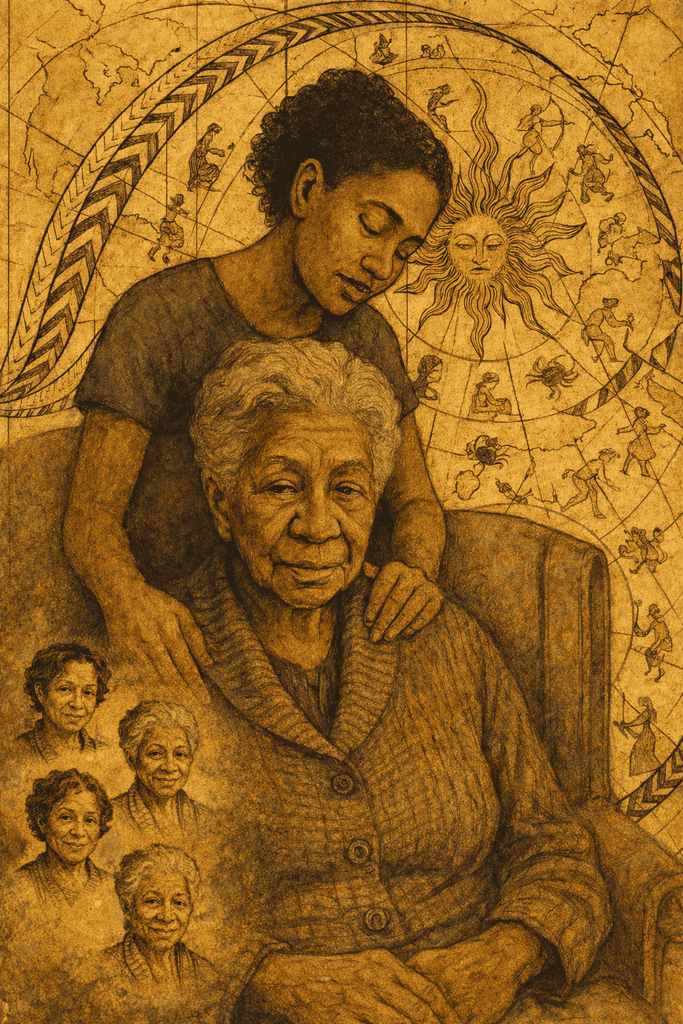
ABOUT THE AUTHOR
Donna de Levante Raphael, Ph.D.,
is director of research of the Alz-heimer’s Foundation of America. She leads AFA’s efforts to advance scientific understanding, innovation and equity in dementia research. She created “What Remains is LOVE,” a mixed-media portrait (left), to honor the journey that she and her mother shared and to remind us that a diagnosis does not erase the humanity of the person living with it.