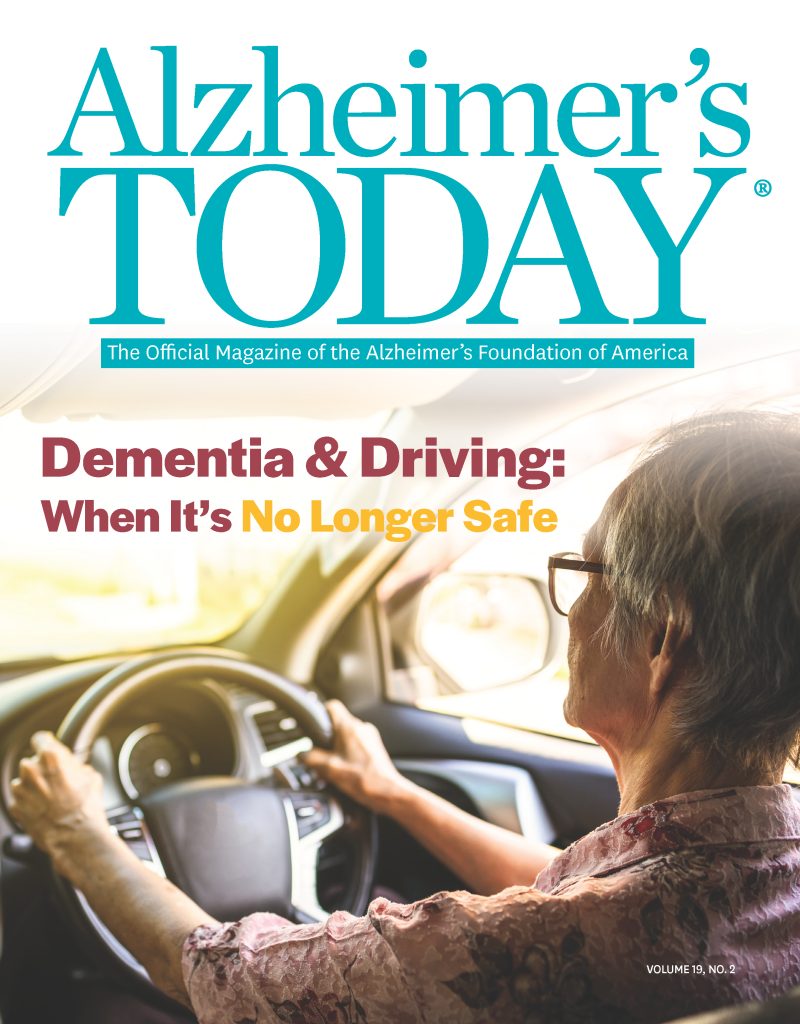
My mother’s cognitive decline has progressed to the point where I don’t want her to drive anymore. Her doctor said she is in the early stages of dementia. She’s never been one to stay home. Even if she has no specific engagement, she’ll go to a coffee shop and strike up conversations with anyone who will talk to her. She lives in the suburbs with no way of getting around on her own without her car. How do I take away her car keys to ensure she’s safe without having her angry with me?

We receive many calls like yours. It can be hard for families
because it’s the first time you’ve had to tell a parent they
can’t do something. It’s a role reversal. Even when you know
someone shouldn’t be driving, it’s normal to have a
lot of ambivalence.
Driving is symbolic of autonomy and independence. Not
being able to drive limits our ability to go out and shrinks
our sense of self. You’re taking away something vital,
especially in areas with no other transportation options.
Some families have taken out the car battery and left the car
in the garage, but this isn’t the best solution. The person sees
the car and they want to drive. It’s a reminder. It’s better to
remove the car.
One option that has been successful is to take the car for a
fabricated repair and arrange with the mechanic to call in
a few days to say the car can’t be fixed. Another is to ask
the person’s doctor to tell them they can’t drive anymore.
A third party giving the news keeps the person from blaming
the family. You must be creative to come up with something
they will accept.
If you experience resistance, know that your person may be
using a coping mechanism, focusing on one thing because
they are so overwhelmed with the confusion of their
condition. They invest in that and get stuck. The coping skills
they had before are not necessarily still there.
“I want to drive” is an assertion of independence. Many people have
been driving since they were 16. Having that right taken away can
trigger anger and paranoia.
If you have the resources, you could hire a companion with similar
interests, or have them use a car service. More simply, you can suggest
that your person ask to ride to church or the store with a neighbor or
friend, or you can arrange this but know that your person might resist,
saying they don’t want to put someone out and would rather stay home.
That’s their last bit of control.
If your person won’t budge, take yourself off the hook, especially if you
are at a long distance. Remind yourself that it is necessary to “take
away the keys.” Then try reapproaching it every so often to see if they
are more open to making adjustments for getting out.
We highly recommend joining a caregiver support group.
ABOUT THE AUTHORS
AFA Helpline social workers Linda Mockler, LMSW, M.Ed., and Melpo Voulieris, LMSW, contributed to this answer.
HELPLINE SUPPORT
If you need assistance in caring for someone with a neurocognitive disorder, please reach out to our free Helpline, seven days a week, at 866-232-8484, via text at 646-586-5283, or webchat at alzfdn.org (available in 90+ languages).