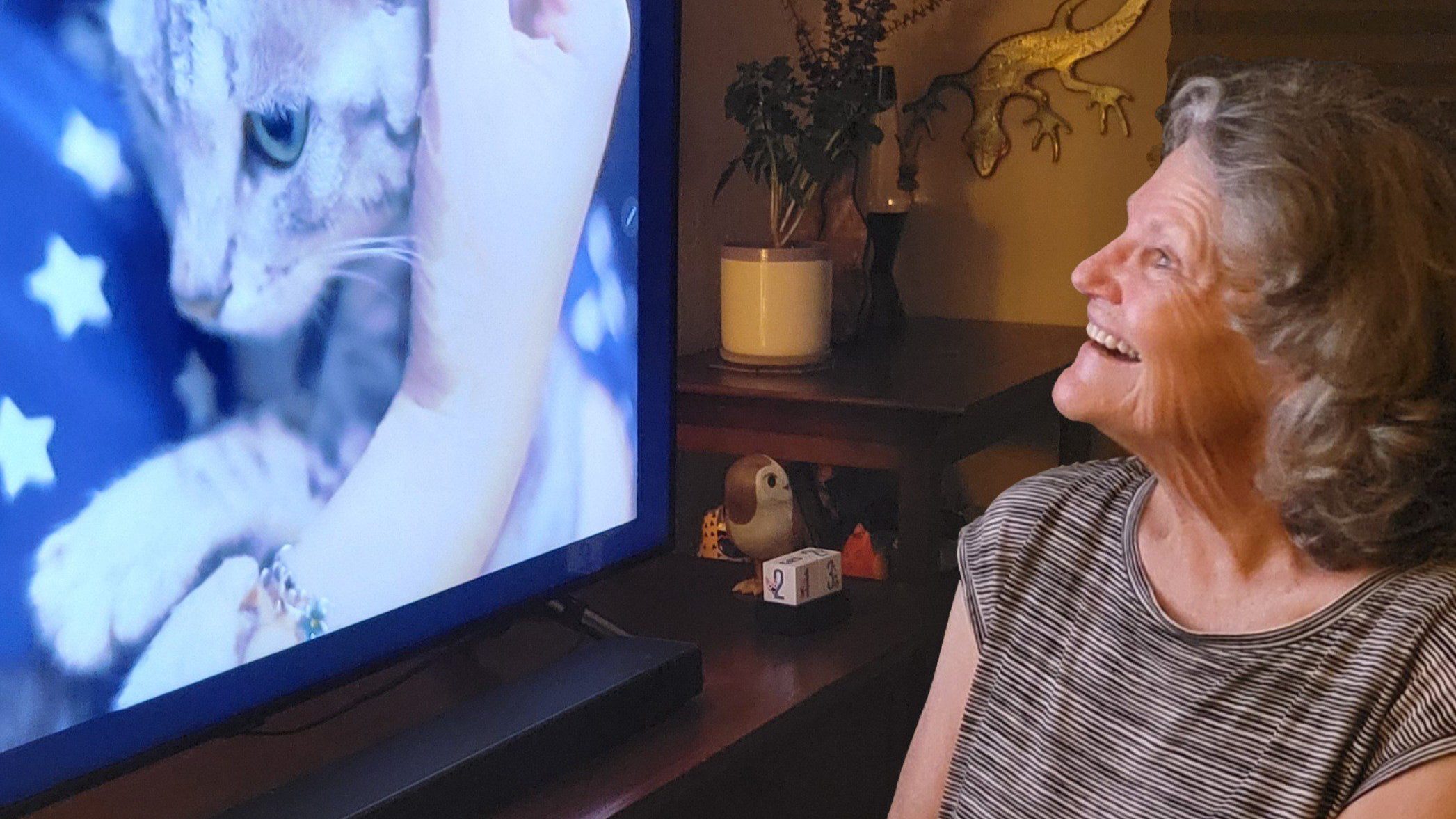
Allyson Schrier was inspired to create Zinnia TV, a streaming service designed for people living with dementia, after her husband, Evan, was diagnosed with frontotemporal dementia (FTD), a condition he lived with for seven years. She found that regular television often agitated him, but sharing familiar images, like family and the hockey photos he loved, helped calm him and allowed them to connect. Drawing on her background in technology, Schrier transformed those meaningful images into videos they could enjoy together, planting the seed for Zinnia TV.
Zinnia was founded in 2019 and released its app
at the end of 2022, after two-and-a-half years of
content creation and testing. Today, the platform offers
programming tailored to a wide range of interests,
including travel, animals, music, nature, baking,
whitewater rafting, sewing, sports and faith, and serves
about 1,800 subscribers, including long-term care
facilities. Designed to feel like familiar television, Zinnia
provides a more comfortable viewing experience, free of
commercials and confusing storylines.
Zinnia TV is not a babysitter. Because it meets the
changing brain where it is by using the right visual and
audio input, enabling the loved one to focus and relax,
it is suitable for all stages of dementia and memory loss.
Zinnia offers
programming
tailored to a wide
range of interests,
including travel,
animals, music,
nature, baking,
whitewater rafting,
sewing, sports and faith.

Family members can watch something
on Zinnia TV together, or your loved one
can enjoy it independently. Zinnia can
also be a gentle tool for distraction and
redirection during moments of anxiety or
for encouraging positive behaviors, such
as drinking water. Most importantly, it
can help people living with dementia feel
capable and successful again.
Schrier shared the story of a
gentleman in a care facility who became
agitated and couldn’t calm down. Staff led
him into a room with a screen. Knowing
one of his passions was cars, they put
on a Zinnia video displaying various car
models. The man immediately walked up
to the wall and began educating the staff
about each make and model. He became
an expert rather than a difficult patient.
Dignity restored.
In another instance, a man sat in
a wheelchair, nonverbal and seemingly
withdrawn. Knowing he had once worked
as a newspaper writer, staff played a
Zinnia quiz on American literature. When
the first question appeared, he suddenly
called out, “Tom Sawyer.” He went on to
answer every question correctly, his face
lighting up with pride, revealing abilities that were still very much there, just
waiting to be reached.
Schrier was uniquely qualified to
launch a venture like Zinnia TV. Her
firsthand experience discovering what
worked for her husband, combined with
a background in technology, provided
an ideal foundation. She worked with
Asymetrix, a Paul Allen (Microsoft
co-founder) company, managing the IT
group. A year later, she was invited to join
Vulcan, another Paul Allen company,
managing Allen’s personal tech projects,
getting disparate systems to talk to each
other on a yacht, an airplane or a chateau
in Nice. Finally, she was head of tech
for the Experience Music Project (Now
MoPOP) in Seattle.
Through those connections, she
was referred to Frank Lee, who designed
Apple’s Memories, the product that lets
users turn their photos into videos. Lee
brought in Bill Uniowski, with whom he
had worked at another startup.
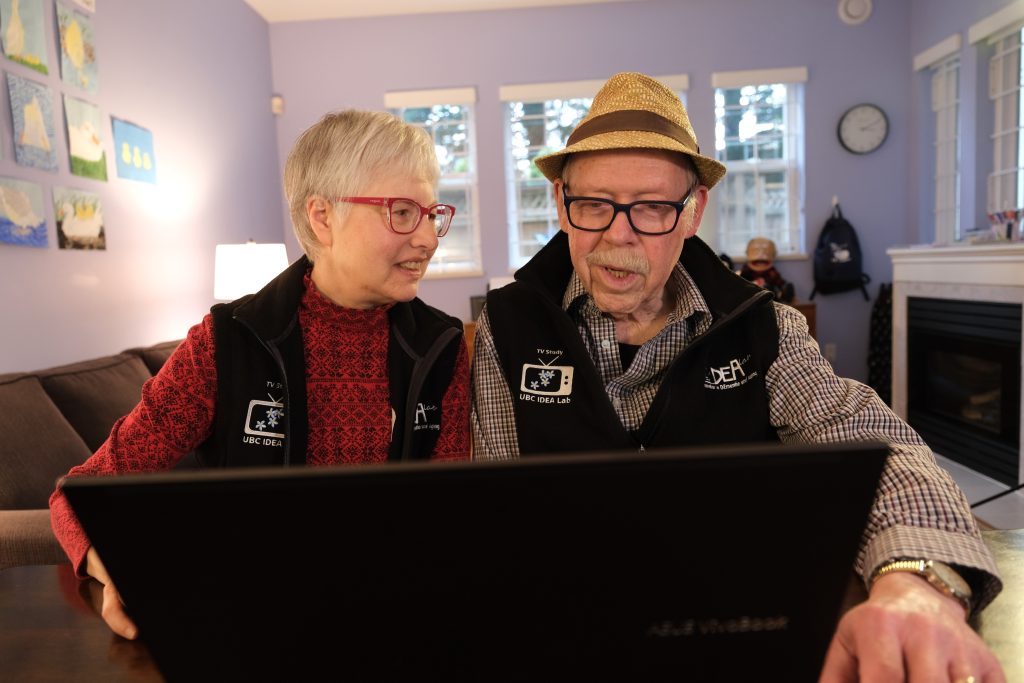
Their Zinnia project attracted the
support of a Canadian philanthropist
to fund two years of research at three
memory care communities in Vancouver,
BC, and Vancouver General Hospital (VGH) that was matched by Mitacs, a
not-for-profit research organization.
Research was conducted by the University
of British Columbia in collaboration
with VGH.
Zinnia has been validated as an
evidence-based dementia care solution
shown to reduce emotional distress, foster
meaningful connections with people
living with dementia, support activities
of daily living and help individuals
reconnect with their past. Additional
studies are underway examining
Zinnia’s potential to reduce the use of
antipsychotic medications, decrease
inter-resident aggression and aid in
delirium prevention.
Zinnia is now Schrier’s full-time
career and, as a volunteer, she facilitates
support groups both under the auspices of
Zinnia and independently. She also does
speaking engagements, “but Zinnia gets
most of [her] work-related time.”
Users can experience a free trial of the
streaming service at Zinniatv.com. The
cost for a family subscription is $69.99 a
year. Care communities pay based on the
number of residents they serve; most pay
between $25 and $100 a month.