Executive Producer/ Co-Director: Little Empty Boxes
A Documentary That Chronicles a Young Adult Son’s Quest
to Find Answers to His Mother’s Dementia
Alzheimer’s TODAY: How does it feel now that this 10-year project of creating a documentary based on your mother’s story is out in the world?
Incredibly cathartic. My life was dramatically different when I
first undertook this project. I was a generalist journalist who had
worked for Al Gore on his now-defunct news and information TV
network targeted to young people, Current TV. My mother was
still alive [Kathy Lugavere was 58 years old, and Max was 28]. Then,
when she got sick, out of desperation for answers, I became hyperfocused
on understanding her condition. I had yet to write any
books. My podcast hadn’t existed yet. And I thought that doing a
feature-length documentary was the best way to memorialize what
my mom was going through, provide some perspective on it, and
help get the science out to a broader audience.
To be honest, I didn’t have any clear window or foresight on how I
was going to professionally handle this topic, other than knowing
that I wanted to explore nutrition. But I studied film in college, and
I decided to embark on this feature-length documentary, which I
officially launched with a Kickstarter campaign in January of 2015.
This began a process of learning that paved the way for all the
opportunities that have come since. I’m incredibly grateful.
What did working on the documentary show you?
I realized that there was a lot of information out there regarding diet, lifestyle and brain health that nobody was talking about. And this topic needed to be brought to a larger audience, and specifically a younger audience, one that wasn’t necessarily aware of or interested in dementia. [While Lugavere was working on the documentary for more than 10 years, he ended up writing the New York Times bestseller Genius Foods, The Genius Life, and Genius Kitchen as well as starting a now top-ranking podcast, The Genius Life.]
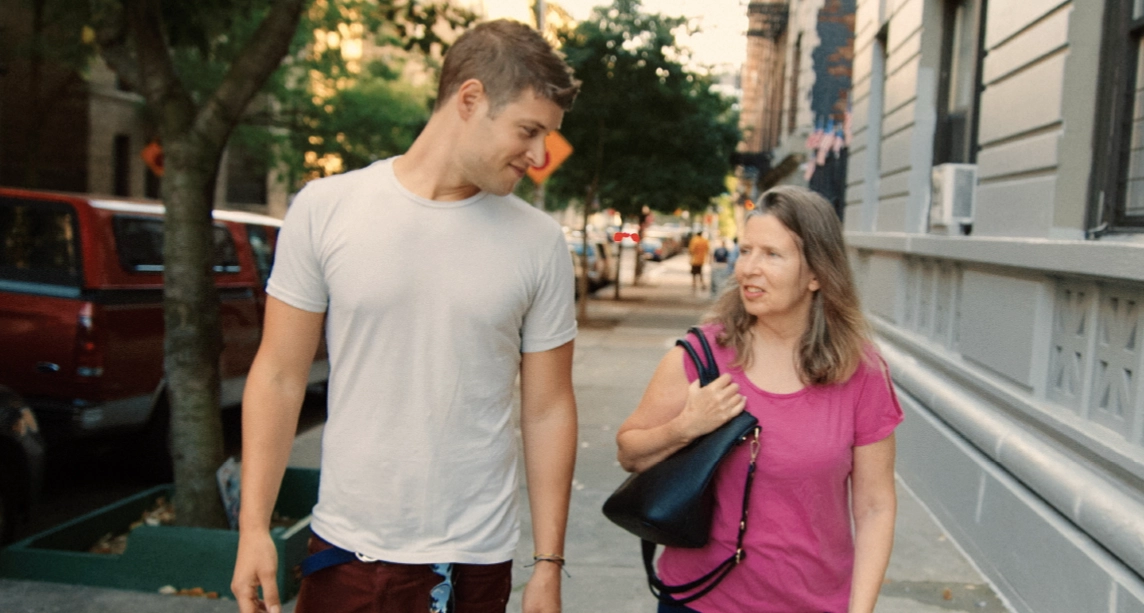
The film chronicles the fuzziness around your mom’s diagnosis. You decide to move back to New York City to help.
At first, she had nonspecific cognitive decline and some movement symptoms. It took a weeklong trip to the Cleveland Clinic to receive her first diagnosis of some sort of neurodegenerative complex. The diagnosis was a Parkinsonian condition (Parkinson’s “Plus”). But she also had striking cognitive decline at that point, and was ultimately diagnosed with Lewy body dementia. The Alzheimer’s connection came about because we weren’t really sure what it was at first, and I’ve learned that many neurodegenerative conditions, while not the same, do share some commonalities — certain risk factors, for example. Alzheimer’s is also the most common form of dementia and the type most studied regarding lifestyle risks. There’s a lot less data on Parkinson’s disease and even less on Lewy body dementia.
A good part of the film also focuses on your conversations with doctors and other medical experts as you try to investigate the possible causes.
My mom was still very young. We didn’t have dementia in our family lineage and my two brothers and I were in utter disbelief. What the film attempts to do in broad strokes is examine the dietary and lifestyle factors that may predispose one to developing dementia. The film doesn’t present a silver-bullet solution. It doesn’t offer a magical “prevention diet.” It basically brings to light important and actionable ideas about nutrition and lifestyle, such as exercise and yoga, which can potentially play a protective role and possibly even slow progression.
What are some of the cautionary callouts in the film?
The film shares wisdom from medical and nutrition experts who describe the many factors that may negatively impact brain health, including chronic, excessive sugar intake, our ultra-processed food supply, an unhealthy gut microbiome (“the gut educates the brain, not the other way around”); and anesthesia during surgery for some (the latter actually led to dementia for my codirector Chris Newhard’s mother-in-law while he was working on the project with me). While there are no easy answers with dementia, one big dietary take-home is that we should fill up our plates with mainly whole foods: colorful, fiber-rich vegetables, and fermented foods (like yogurt or kimchi), which support the gut lining and reduce intestinal permeability. There’s also merit to not shying away from nutrient-dense proteins like wild-caught salmon, free range chicken and grass-fed beef and eggs. Healthy fats, like extra-virgin olive oil, are also recommended.
Do you have advice for other caregivers?
Learn as much as you possibly can and integrate that advice as you see fit into your own life. I think it’s important, first and foremost, to lead with love. Make sure the people in your life know that you love them, and make sure they know that you know that you are loved. Kathy Lugavere, 66, passed away December 6, 2018 of pancreatic cancer after living with Lewy body dementia for 8 years.
“My world stopped in 2011 when, on what was supposed to be a relaxing summer vacation, my mother couldn’t recall what year it was. Pressing her, in disbelief, she struggled to find the answer and began to cry. That was the moment I knew our lives would never be the same. Little Empty Boxes wasn’t a film I planned to make. It crept in, claws out. Watching dementia cripple her life was excruciating, but within that pain bloomed a purpose. I had to do my best to understand this condition, not just for her, but for everyone facing the abyss of cognitive decline. My film isn’t about medical pronouncements or miracle cures. It’s raw, messy, and deeply personal. It’s a plea for empathy, a tribute to my mom, and a love letter to the science of dementia prevention. It is my hope that by sharing my mom’s story, we can illuminate the path not just to delaying, slowing, or even, possibly, preventing this condition, but to cherishing every fragile memory, every laugh, every ‘I love you’ before the boxes become truly empty. This film isn’t about endings; it’s about making the most of what remains, together.”
~Max Lugavere