By Natalie Toro
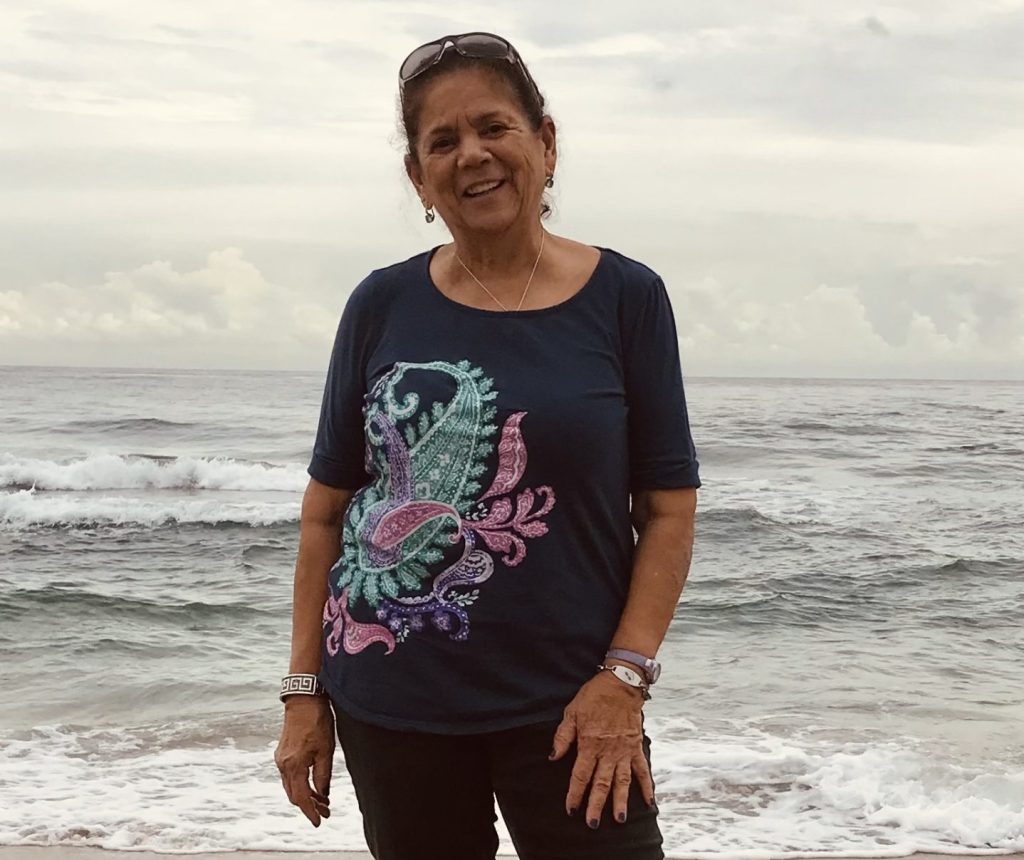
Born in Puerto Rico, my mother, Luz, aka Lucy, arrived in New York City at 13, embodying the resilience and ambition of stories much like the musical West Side Story. Her beauty often stopped people in their tracks, mistaking her for Natalie Wood, which is why she named me Natalie. Much of my success as a Broadway actor with a career spanning more than three decades is due to my mother’s relentless drive to see me succeed.
Despite being a young single mother raising my brother, Steven, and me, her work ethic was unparalleled. Later, she welcomed our baby brother, Kris James Diaz, into our family.
Working 12- to 16-hour days as an X-ray technician and later as a CAT scan and MRI supervisor, she proudly retired to Port Saint Lucie, Florida, humorously choosing it because her name was in the name.
Mom was my best friend. She traveled to see my shows, even flying to Tokyo for In The Heights. She loved music, dancing, and was the life of any party.
Her Alzheimer’s diagnosis was a shock, especially since she had already battled non-Hodgkin’s lymphoma while living with me in the Bronx in a small one-bedroom apartment.
In 2020, during the pandemic, she moved in with me and my spouse in upstate New York. Her illness progressed. Navigating Alzheimer’s was the hardest role I have ever played. I sought solace in resources like The 36-Hour Day, a book that changed my life. I joined caregiver support groups, spoke to Alzheimer’s advocacy groups, and a therapist, yet I often felt alone.
With all the advice on “aging in place,” I decided to add an extension to my little 872 sq. ft. house. She needed space for the aides. I wanted her to stay at home. But construction issues became challenging, and we could not move her in. Once again, a major decision was looming. My therapist asked me, “What is your plan B”? Plan B? I didn’t have a plan B.
I reached out to all my resources once again, and they helped me find an assisted living memory care home for mom. This was supposed to be temporary.
The Struggle is Real
Changing my mom’s living situation marked a turning point in her journey. The relocation seemed to trigger a rapid decline, as if her brain used it as a reason to deteriorate with each passing day. Despite recreating her room with familiar furniture from our home and being there daily, she became increasingly angry, fearful and began experiencing hallucinations. Without medication to manage these symptoms, I faced the daunting task of rallying her neurologist to take action.
The facility struggled to care for her, and I often found medication discarded under her bed or on the floor. Her behavior eventually led to eviction, and an arrest, unbelievably so, after slapping another resident, leaving us in a desperate search for a new solution. The word “advocate” became central to my life as I tirelessly sought ways to help her, to keep her calm, and to ensure her safety.
I couldn’t go back to work even if I wanted to.
The summer of 2023 was particularly challenging, as I lost my sense of self amid isolation and stress. “Aging in place” advice, construction issues and Medicaid battles added to my anxiety. The financial burden of nursing home care loomed large, yet her dignity and legacy remained my focus.
When my mom needed to transition into a nursing home after her hospital stay, the uncertainty of Medicaid approval added an unbearable weight to my already heavy heart. Even with her approval for Community Medicaid, the question of why she wasn’t eligible for Chronic Care Medicaid haunted me. I hired an attorney to help me pilot this unknown path. The nursing home provided excellent care, but the staggering $180,000 bill is a constant source of worry.
The fear is still palpable, as my attorneys and I engage in a battle with Medicaid and the county, awaiting a fair hearing for over a year. It was a bitter pill to swallow, knowing that my mom, who dedicated her career as a civil servant to the State of New York, faced such bureaucratic obstacles in her time of need.
This experience taught me the harsh reality that navigating Medicaid requires not just persistence but also legal support. Medicaid had me prove every hour of her care for the years she lived with me, with receipts to back that up. I spent over 160 hours doing this for them only to be shut down and told I was wrong. I am not.
On May 10, 2025, the day before Mother’s Day, my beautiful mom, Luz N. Diaz, released her soul to the heavens after a nine-year battle. Her legacy as a civil servant in New York and a loving mother will never be forgotten. I feel so blessed to have shared this journey with her, filled with laughter, tears and love.
As I slowly return to my career, I plan to write a book to help other caregivers at the start of their Alzheimer’s journey. If I can change one life through my performances, and change one life with my book, then I’ve done my job.

Natalie Toro’s 5 Care Tips for Caregivers
- Keep a planner for every year with written doctor appointments, the trips you took, your clocked hours, the hours for aides. Save your receipts for everything, organized, even if it’s for a coffee or a candy bar. Medicaid asked me to prove every hour of my mother’s care for the years she lived with me, with receipts to back that up.
- Maintain a journal of behavioral changes about your loved one and even yourself. Remember that you are also a part of this journey, and this will certainly change you.
- Try not to “fluff off” the advice of others when they tell you to take care of yourself. You will not feel like you’re the important one, and you’ll say that you’re fine. The bottom line is that you are not fine, and you need respite and breaks. This will break you.
- Advocate and ask questions even if you think they are absurd. My favorite poet, Rainer Maria Rilke says, “Live the question.”
- Tell your loved one that you love them a million times, kiss them a million times, smell their hair, their clothes, hold their hands, look into their eyes. It will never be enough.

ABOUT THE AUTHOR
Natalie Toro is an accomplished actress and singer, Broadway and beyond, known for roles in Les Misérables, Cats, Evita, A Tale of Two Cities and In the Heights. Visit her website at www.natalietoro.com to learn about her lifetime of achievements.

More Alzheimer’s TODAY stories to explore.
- Transitioning to Long-Term Care
- Alzheimer’s Not the Same as Dementia
- Family Fights Getting in the Way of Caregiving?