Therapeutic horticulturist Sallie Stutz has no trouble offering an anecdote to illustrate the power of her work. She has countless examples but chose one that involved two nonverbal women who built a friendship in the gardening class she taught as part of AFA’s weekly Teal Room in-person programs.
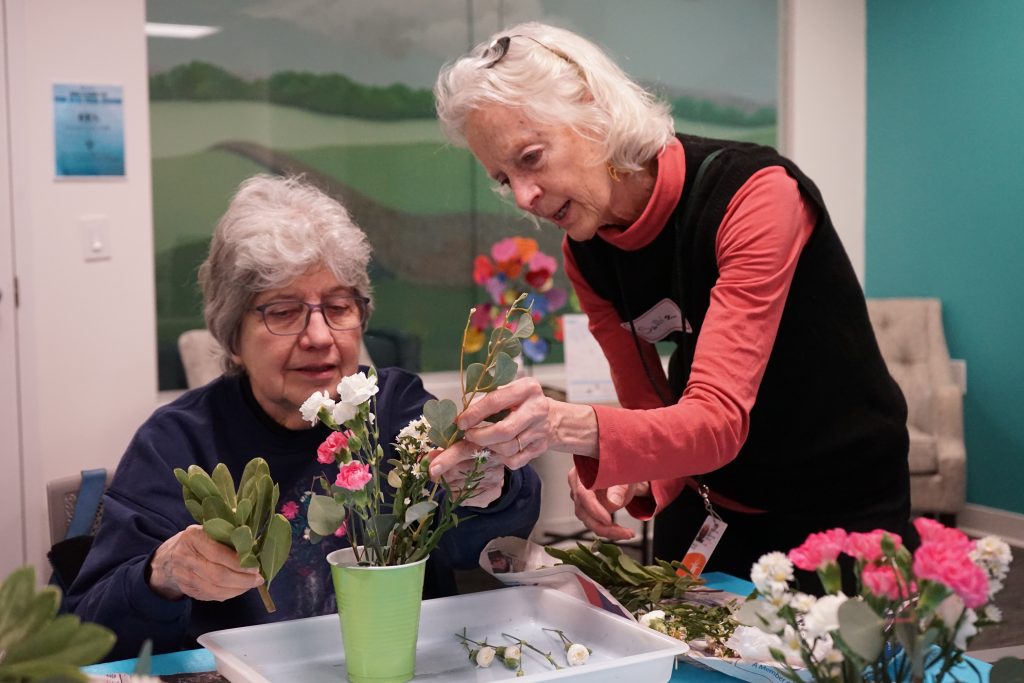
“After a while, they only wanted to
sit next to each other,” Stutz says. “One
would often wait with great anticipation
for the other to show up for class. The
caregiver for the older woman often
set up other social times for the two of
them. Their new friendship was so sweet
and tender to watch despite their levels
of dementia. We all looked forward to
having them in the class. I cherish the
memory of the two of them.”
Stutz, who received a certificate in
therapeutic horticulture from the New
York Botanical Garden, uses plants
and nature-inspired activities to work
toward the improvement of the physical,
cognitive, psychological and social goals
of participants.
“Often the repetitive-focused activities
can calm the mind and give relaxation.
Caring for plants enhances memory and
attention, which can benefit people with
cognitive impairment. Nurturing plants
gives a sense of responsibility and purpose
and success. It builds self-esteem. I often
try to use familiar and seasonal plants
that might trigger good memories such as
Christmas cactus and roses.”
Stutz shares the following tips for care
partners who want to try simple gardening
activities at home with their loved ones.

Before You Start
- Be sure you have ample safe space so you can work side by side — good, clear access to a table.
- Provide table cover protection. Don’t worry about the mess.
- Use small work trays (cafeteria-style ones) to help keep plants and materials all in one smaller work area.
- Use small cups to move soil into a potting container. Avoid sharp tools/materials.
- Use only plants that are not known to cause skin irritations.
- Be mindful of those who may mistake soil for food.
- Make sure your person has no allergies.
- Encourage conversation around your activity.
Some Ideas to Get You Started
- Cut fresh flowers and greens from your garden — or pick some up at a local market — and create simple, seasonal arrangements to enjoy in your home.
- Press flowers from bouquets or from the garden.
- Grow windowsill herbs or microgreens.
- Touch, smell and identify herbs like rosemary, mint and lavender.
- Water your indoor/outdoor plants together.
- Buy seeds, then plant them in small pots and watch them grow.
- Use leaves, petals and seed pods to create a collage.
- Make potpourri sachets with rose or lavender.
- Grow wheat grass or catnip for your cat.
- Make your own mint tea.
- Make fresh salsa from your garden of fresh tomatoes, peppers and herbs.