Repairing What Wasn’t Broken

Three years ago, after Madeline
Bastida moved her father,
Fernando Burgos, from Puerto
Rico to a memory care facility
near her Seattle-area home,
she noticed he was getting
depressed and talking about
the past. She was worried until
she found a way to quickly turn
his mood around. All it took
was a doorknob. To be precise,
a loose doorknob.
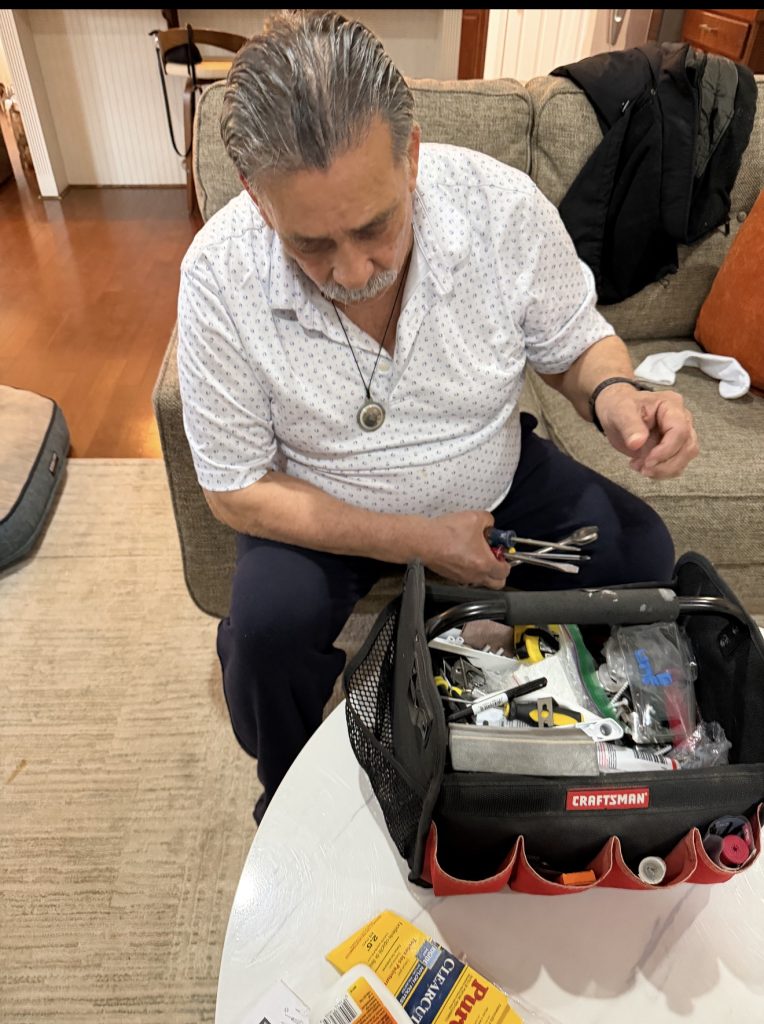
Burgos had spent 35 years
as a building superintendent
in Manhattan, a job he loved,
before retiring to Puerto Rico.
Bastida’s husband, David, came
up with the idea of loosening a doorknob and
asking him to fix it to make him feel needed
and to connect him to the job he loved.
It took him two and a half hours, seated in front of the
knob to her home office, taking a couple of breaks, asking for
a different screwdriver and “putting himself to sleep,” but he
came back, determined to get the job done.
Now 73, he was diagnosed with Alzheimer’s at 57 in Puerto
Rico and, when he came to Washington State, was diagnosed
with vascular dementia as well. He still knows his daughter,
with whom he often spends the weekend. Bastida, a litigation
adjuster for an insurance company, has gotten his care facility
to create tasks for him as well. All are simple, nothing like
fixing the plumbing, which he once did with ease.
“It gives him a purpose and keeps him happy and joyful,”
she says. “It’s one task at a time, meeting him where he is, so he
doesn’t get frustrated.”
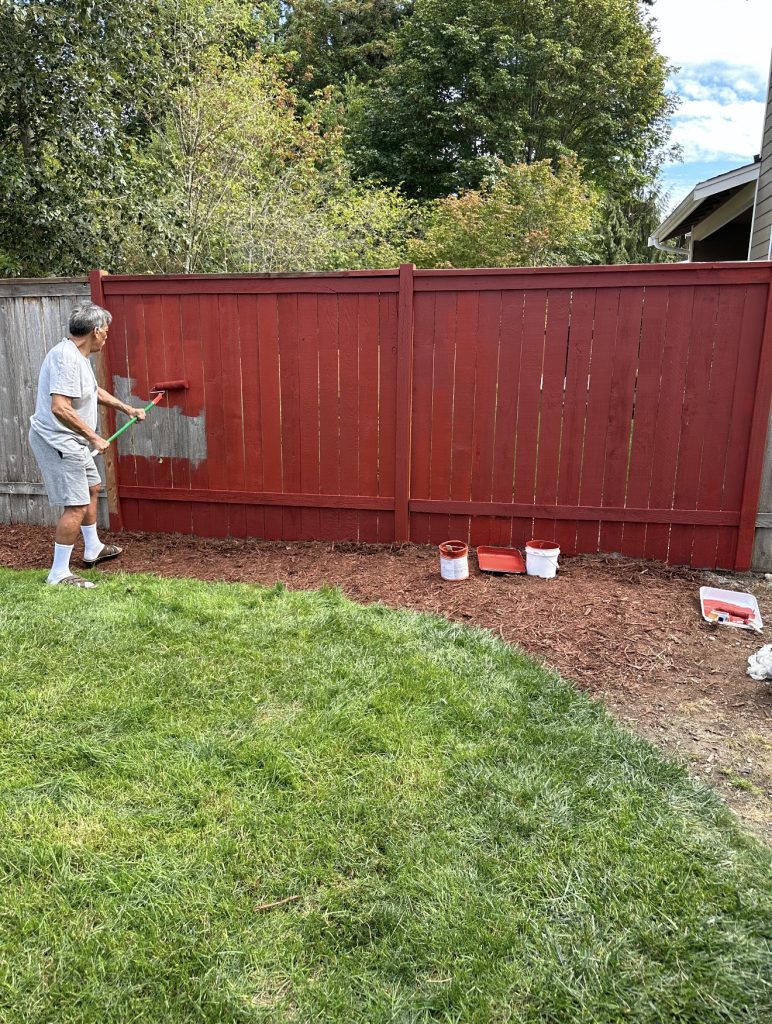
When asked to paint the back of
the fence in the yard, he was excited and
worked on it intently, but Bastida saw he
kept painting the same panel over and over because he didn’t
remember having done it. She worked with him to guide him.
“We went to Home Depot and he picked the color (red).
Every day, we did one panel at a time.”
Bastida hasn’t had trouble inventing tasks and shares
her tips on social media. (Check her out on Facebook,
@daughterdadalz, and on Instagram, @andy.maddy.alz.)
“I felt I needed a community. It can get lonely on this
journey. I created a page to show people what was working for
me. I’ve created friendships out of it.”
She advises other care partners to reach out as well.
“Don’t hold it in silence. Ask for help from someone. It’s
OK not to know all the answers. Nobody does. There are people
out there to help you. And try to find the joy in these times.”